
Empowering Conversations About Scams

 iHeartRadio iHeartRadio
 Amazon Music Amazon Music
 Apple Podcasts Apple Podcasts
 Pandora Pandora
 Podchaser Podchaser
 Audible Audible
 Spotify Spotify
 Deezer Deezer
 Spreaker Spreaker
 Podcast Addict Podcast Addict
 Youtube Music Youtube Music
 YouTube YouTube
 Castbox Castbox
 Castamatic Castamatic
 Castro Castro
 Fountain Fountain
 Goodpods Goodpods
 Overcast Overcast
 PocketCasts PocketCasts
 Podimo Podimo
 Podurama Podurama
 RSS Feed iHeartRadio iHeartRadio Amazon Music Amazon Music Apple Podcasts Apple Podcasts Pandora Pandora Podchaser Podchaser Audible Audible Spotify Spotify Deezer Deezer Spreaker Spreaker Podcast Addict Podcast Addict Youtube Music Youtube Music YouTube YouTube Castbox Castbox Castamatic Castamatic Castro Castro Fountain Fountain Goodpods Goodpods Overcast Overcast PocketCasts PocketCasts Podimo Podimo Podurama Podurama
Conversations about scams usually happen after your loved one has become a victim and these conversations are not always positive nor productive.
Join us as we discuss how to have conversations about scams with your loved ones that empower you both.
Happy Holidays!
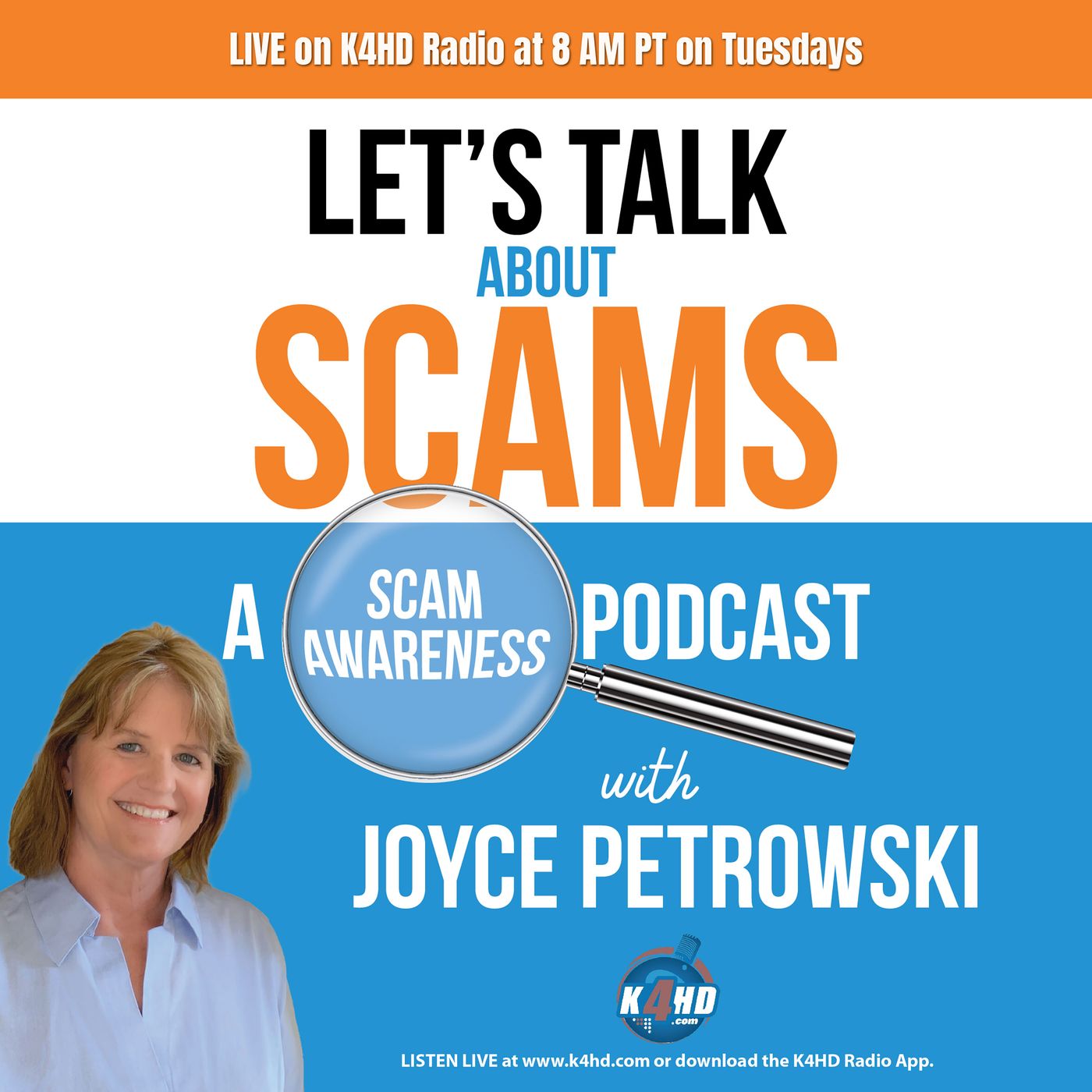
Let’s Talk About Scams is broadcast live Tuesdays at 8AM PT on K4HD Radio - Hollywood Talk Radio (www.k4hd.com) part of Talk 4 Radio (www.talk4radio.com) on the Talk 4 Media Network (www.talk4media.com). Let’s Talk About Scams TV Show is viewed on Talk 4 TV (www.talk4tv.com).
Let’s Talk About Scams Podcast is also available on Talk 4 Media (www.talk4media.com), Talk 4 Podcasting (www.talk4podcasting.com), iHeartRadio, Amazon Music, Pandora, Spotify, Audible, and over 100 other podcast outlets.
Disclaimer: The information contained in this podcast is intended for informational purposes only and is not a substitute for individual professional / legal advice. The podcast information was carefully compiled from vetted sources and references; however, R.O.S.E. Resources / Outreach to Safeguard the Elderly cannot guarantee that you will not fall victim to a scam.
Become a supporter of this podcast: https://www.spreaker.com/podcast/let-s-talk-about-scams--6483699/support.
0:01 This program is designed to provide general information with regards to the subject matters covered. This information is given with the understanding that neither the hosts, guests, sponsors, or station are engaged in rendering any specific and personal medical, financial, legal counseling, professional service, or any advice. You should seek the services of competent professionals before applying or trying any suggested ideas. The information contained in this podcast is intended for informational purposes only and is not a substitute for individual professional legal advice. The podcast information was carefully compiled from BETTED sources and references. However, Rose Resources outreach to safeguard the elderly cannot guarantee that you will not fall victim to a scam.
0:50 Let's talk about scams. It's the must listen show for anyone who wants to protect themselves and their loved ones from scams. Every Tuesday am Pacific time on kfour HD Radio, Joyce Petrowski, founder of Rose, and her guests will provide valuable insights and practical tips on how to recognize and protect yourself from scams. And now here is your host, Joyce Petrowski. Welcome back everyone, I'm Joyce Petrowski, founder of Rose Resources Outreach to Safeguard the Elderly. You can find more information on our website at Roseadvocacy dot org. Click the subscribe button so you don't miss an episode of this show.
1:34 You can find all of our previous episodes on our YouTube channel, and all of our social media channels are on our homepage of our website again, Roseadvocacy dot Org. Scroll down to the bottom of the homepage and you're going to see where you can sign up for our newsletters. We have one that is sent in the mail at the beginning of every month, and then we have one that comes out at the beginning of the month via email, and every Tuesday morning at nine point fifteen, you're going to get that Tuesday Tip. So that's coming up here. In about twelve thirteen minutes, you'll get that Tuesday Tip in your inbox, and we're going to talk a little bit more about that today. So today's title empowering Conversations about scams with your loved ones. So an ounce of prevention is worth a pound of cure. We've heard that a lot. What's that mean. Well, it emphasizes taking proactive measures to prevent problems, and that's far more effective and easier than trying to fix them, fix the problems after they occur. So we think about this, especially with this saying an ounce of prevention is worth a pound of cure.
2:53 In healthcare, we go to our regular health checkups, whether they're annual, you know, twice a year year, however often you go when you feel sick, you know, you go to the urgent care, you go to the doctors. You know. Some people get the flu shot as a preventative. Some people get other you know, other I think there's a shingle shot. There's a bunch of different things out there. Vaccines you can get. It's you know, everyone's choice whether they get them or not. But let's think about it. In other cases, we take care of our vehicles. We get the maintenance done on it, you get the oil change, you get the brakes replaced, different things like that. Also, when you're out there driving, we use defensive driving. You know, we use it all the time, whether you think about it or not. Especially if you see something happening, you're going to use your defensive driving to avoid being in an accident. So let's use this with scam prevention as well, So I get it. Scams they're not a fun topic to talk about. We don't like to accept the fact that we're vulnerable and that, yes, we can fall victim to scams. A lot of people say after they've fallen victim to a scam that they feel stupid that they
4:24 fell victim. It's a normal reaction. But you have to understand scams have nothing to do with intelligence. It's all emotional based. So you're thinking out of emotions. You're not thinking out of your rational state where you would make an intelligent decision. I think we can all think back to when we've made decisions out of emotions and then whether it's two hours later, a day later, we realize the decision we made, we're in our rational state, we thought about it some more, and we've got oh, I would have made a totally different decision. We have to apply this with scams as well, you know. And yeah, scams are not fun to talk about. Diseases are fun to talk about either, nor car accidents. But we take preventative measures like I talked about before, getting regular checkups and maintaining our car and defensive driving, you know, in order to avoid in order to avoid fixing the problem after they occur, right, fixing your vehicle after an accident, fixing your vehicle after if you don't change the oil, all of that stuff. So excuse me. So what is what's a way to learn more about scams? Well, scam prevention measures. Big one is awareness and education. Social engineering
5:58 plays a large role in scams. Social engineering exploits your human behavior, your emotions. The scammers do in order to get your personal identifiable information and your money. You know, if they're trying to get your personal identifiable information, they're doing it to steal your identity to get money. Maybe they haven't gotten money directly from you, but stealing your identity they can go out and get credit and they can get credit cards and loans and all kinds of stuff in your name. But they're getting the money, they're getting the asset, whatever it is, and you're left footing the bill. So identity theft has to do with money as well. So was looking at a security dot org article that was updated on December third of this year.
6:54 Was looking at it this morning, and it says every four point nine seconds someone becomes a victim of identity theft in the United states. We're not talking about four or five days, four or five weeks, months, four or five hours, it's four point nine seconds. That's a lot of victims. Now, I'm not saying that scam prevention is going to prevent one hundred percent of the scams, but it is going to prevent a lot of them. Getting you more aware of what's going on out there, aware of the protection tools you can put in place, things you can do that can help you all develop a healthy skepticism and make scam prevention a habit. So how can we be proactive with scam prevention? Well, as I said before, awareness and education that's the key. Yes, they can.
8:01 There's a lot of new technology that comes out, and there's a lot of people you know, using AI for this new technology to do text scams and all of that is great, but social engineering plays a big, big role in scams, and so getting people to regularly talk about scams, you know, and and you know, we understand everybody's busy, especially this time of the year, but whether you're physically with your loved ones or you're talking with them on the phone or a face chat you can have, you can bring scam prevention into the conversation, but you don't want that conversation to be to come off as judgmental or negative. You know, you don't want to every time you mentioned scams, say don't click on links, don't respond to text or emails or phone. You know, don't answer the phone if you don't know who's calling. All those types of negatives, those don't don't, don't, don't things, those can come across as very negative. They can come across as judgmental. You know a lot of different ways.
9:18 So you want to make it conversational. You want to talk in a positive way about scams so you can help build that healthy skepticism and make scam prevention a habit. The more we hear something, the more it becomes a habit. Reinforce that you're there to help, not judge, and let them know that they can talk to you. You can be their trusted person even if they accidentally clicked on a link, if they accidentally responded to a text and realized it after that, let them know that they could. You're not gonna You're not gonna have You're not going to judge them. You're not going to get upset angry that you know you want to be able to help them mitigate any damages. You can be their trusted person, as I said, So, I guess the next question is going to be, well, where can I, you know, find all this information to talk about? You know what. Obviously, you can look things up on the internet. You can google it, and you can put a scam a specific scam, and you're going to find a lot of information out there.
10:29 You can look up scam prevention tips. You're going to find a lot of information out there. But we've got you covered on that. As I said in the introduction, we have the Tuesday tip that comes out every week in your email inbox, and you might already know the tip, but it's reinforcing your healthy skepticism. It's reinforcing your scam prevention, making it a habit, and that right there is going to give you a conversation starter on what to talk about that week with your loved one. You can follow us on Instagram, YouTube, Facebook, LinkedIn. We are actively growing our YouTube page. I see we've got some more subscribers, but we're still trying to hit that one hundred subscriber mark.
11:18 So please subscribe to our YouTube page. You'll have all the episodes of this show, the full show each week. But then you also can look at the shorts in there, which you're i know, anywhere from about thirty to fifty five seconds. That kind of gives you a highlight of the show. And so I'm going to share my screen and I'm just going to look at Facebook, our Facebook account, so you can see just some different ideas on what you can look at. So this is our Facebook account, so you can see yesterday we posted a scam alert about a new phone return scam. This right here could be a talking point for this week. You know a lot of people get new phones for Christmas, but there's this new phone return fraud that's out there. We give tips on what you can do. This right here is just some information on our year end giving campaign which we are actively working with that today, as are a lot of nonprofits are actively working on their year end campaign.
12:34 If you're willing and able to support us, that would be awesome. Every dollar matters. You just go to this link here on our homepage, go under the donate and then year end Giving. All the information is there. Let's hear last week or yep, that was last Friday. There's some holiday phishing scams. You know, we give you information on that. Last week get data breach. Petco has had a data breach, and let's look at the information that we give informations potentially exposed includes names, so security numbers, driver's license, dates of birth, financial account details, credit and debit card numbers. So what can you do? Well, if you haven't placed a credit freeze and you want to do that, go to all three of the credit reporting agencies and place a credit freeze on your credit so someone gets your credit or debit card numbers. Or no, I'm sorry, so someone can't take credit out in your name, getting a new credit card, you know, buying a car and taking a loan out for it. You can also put alerts on your credit cards so you get notified of all the transactions. It doesn't prevent the credit card fraud from happening, but it lets you know every transactions so you can mitigate the damages. You can go in and monitor your credit reports on a regular or basis, make sure all of the active credit that's on your report is actually your credit. If you see something there
14:07 that's fraudulent, you can take steps with identity theft to work through and get that credit off of your account. Be very careful that you know, with any type of data breach, there's going to be an increase in phishing scams attempting to get your information or attempting especially attempting to get you to, you know, give them access to your computer. So a lot of different information. This is a video of mine, but you'll see information where I'm on people's podcast and we talk about different things. Now, this is interesting here and I don't know if you guys have seen this in the stores. Last week we put it out about I happened to be visiting a grocery store and I was actually looking for an Amazon gift card. So look at this new holder where you actually have to pull the cards through the slot and it rips that little handle there on the cardboard on the outside of the card. This is great because if you happen to see one of the cards lying there and that slot there on the cardboard has been broken, then you know someone's pulled it out of there. Do you know if they've done something like if they've scanned the information on the gift card, so then if you're to buy it and activate it, they now have access to that money on that card and they spend it before you can even spend it or give it away as a gift, and you're the person you gave it to can spend it. So this is great. Now, this particular grocery store didn't have it on all of their
15:40 gift card holders, but I'm hoping that over time they are going to have it on all of the gift cards. It would be nice if they put the gift cards behind the customer service and you had to go to customer service. I don't know that that's going to happen, but let us know if you've seen these. I also saw it on the You know, the stores sell the Visa MasterCard, but there's a lot of stores that sell gift cards. Like I said, I happen to be at a grocery store Fries and saw this. Let me know if the grocery store you go to has these, or maybe you go to a different store to buy gift cards, let me know if you've seen them there as well. It's a deterrent. We have our events on there as well.
16:20 We got the golf tournament coming up. You know. Here's another. On December eleventh, a new scam alert about fake kidnapping scams where they use they're using social media posts and missing person searches to stage fake kidnapping schemes. Again, they create panic to try to get you to pay money. How to secure your cell phones. You know, job scams meet aging scams. There's a lot of information on our social media, on our emails that we send out that can give you conversation starters in order to have these conversations with your loved ones. And let me go to our website here and I can show you so right here's the homepage of our website. As I said on that donate button, there's donate here, go down to year end giving. If you're looking for our events, you can go down here and you'll find our golf tournament. We have some resources. I am working on getting those updated, so those will be updated hopefully over the next couple of weeks. You can find our social media channels right there.
17:39 You can click on them and go and hit subscribe. You can see that we're platinum. We've been given platinum for Candid, which is guide Star. And if you scroll all the way down to the bottom here, you can download our safety checklist and stay connected to with our uh to us with our latest news and information. So this is our mailing list. So you can put your our email list first name, last name, email address, hit subscribe. You can download our safety checklist over here. Don't want to get things in emails. Email box is always overflowing and you can't get to everything. Maybe you want to have it mailed to you. We need your first and last name and your address and then your email and hit sign up and you are. You're good to go.
18:36 We will add you to the list our database for the mailed newsletters. A bunch of other stuff down here, but giving you the gist of it. So again, I'm all right, I'm gonna stop sharing here, but you get the idea on you know, you can go search. So say, for instance, you see some information about gift cards scams, and you want to talk to your loved one about these new gift card holders, you know, at the grocery store, and make sure that you only take them. You're the one taking them off and you're not just taking the ones laying there. It's a deterrent for the scammers to do something bad with the gift card. And say, maybe you want to get an idea you know as to just how bad the gift card scams are. You can search that on Google, or you could say gift card scam victims twenty twenty five, and you're going to find some information about victims who have shared their story. They could be doing it in a video or an article, but you can find information like that. If you you know, want to find out like romance scam victims or investment scam crypto victims, you can look that up. You know, you can look up the information about the new cryptocurrency law that went into effect in Arizona at the end of September. You can Google that and you can get to the I think it's a Better Business Bureau also
20:08 the I'm not sure if the Arizona Corporation Commission has it on there, but I know I saw it on the Better Business Bureau. But you can get to the Attorney General site that has all this information on there and about this new crypto law that went into effect and the possibility if you follow all of the requirements that you might be able to get part of your losses back if you've been scammed through cryptocurrency. So you can also take our information on you can take our social media pages and forward them to your friends and family members and say, hey, this is really good information.
20:55 You should subscribe to learn more and keep up to date on what's going on because scams have gotten out of control. You can take our newsletters and forward them to family and friends. They can there's a subscribe button down at the bottom where they can subscribe to it, or you can forward them the website and tell them scroll down to the bottom and subscribe that way. It's just great to have this information, so you not that you can sit there twenty four hours a day, seven days a week and be going scam scam scam scam scams. What do I need to do? But the more you know, have weekly conversations. Take five or ten minutes out of your conversation and talk about something and ask the you know, ask the questions you know, have you heard about this?
21:43 Did you know? If you did this? It can help protect yourself. The free title alerts with the Recorder's office in all the counties in Arizona. You know, if you know your loved one has property, you can say, hey, have you signed up for the free title Alert at the Panale County Recorder's Office. The Maricopa County Recorder's Office. Y'all know, I didn't know I could do that. Well here, let's uh, you know, you know, let's uh, I can pull it up and we can put the information in so you get notified, you know, show them how to do things. Talk to them about why it's good to have a trusted tech support person, so you know who you're when you have an issue, you know who you're going to call. You're not going to panic and pick the first company or person you find on Google, which could be a scammer impersonating a company, could be a scammer trying to you know, be a text impersonating a tech support person to get you to let them into your device. You're going to know who you're going to call.
22:47 You've gotten references from family and friends that hey, this is a is a person you can trust that can help you with your devices. And I'm going to put this plug in again. I've said it a lot. You need to treat your mobile phones like a mobile computer. You need it to have it locked down with strong antivirus and anti malware, just like you would your other devices. So in closing, I'm going to ask you this question and you need to ask yourself this question. Would you rather have a regular conversation about scams and build healthy skepticism through scam prevention habits versus spending time recovering from a devastating loss. It always takes more time to fix a problem than it is with protection and preventative measures.
23:42 So that's all I have for you guys. Today. We want to wish everyone happy holidays, Merry Christmas, and I'll see you next Tuesday, So I'll wait till then to say Happy New Year. But we hope everybody has a great holiday and merry Christmas and we look forward to seeing you next week. Thank you. Well, that's all the knowledge for this episode. Tune in every Tuesday at eight am Pacific time on KFOHD Radio at KFORHD dot com as Joyce explores a variety of knowledge. So you have the power to make scam protection your healthy habit. And until then, feel free to reach out to Joyce and let's talk about scams.


